
Water treatment
A UV reactor needs a validated operating window
A reactor rating needs the water quality and configuration that go with it. Ask what happens when those conditions change.
Aeonitya Editorial
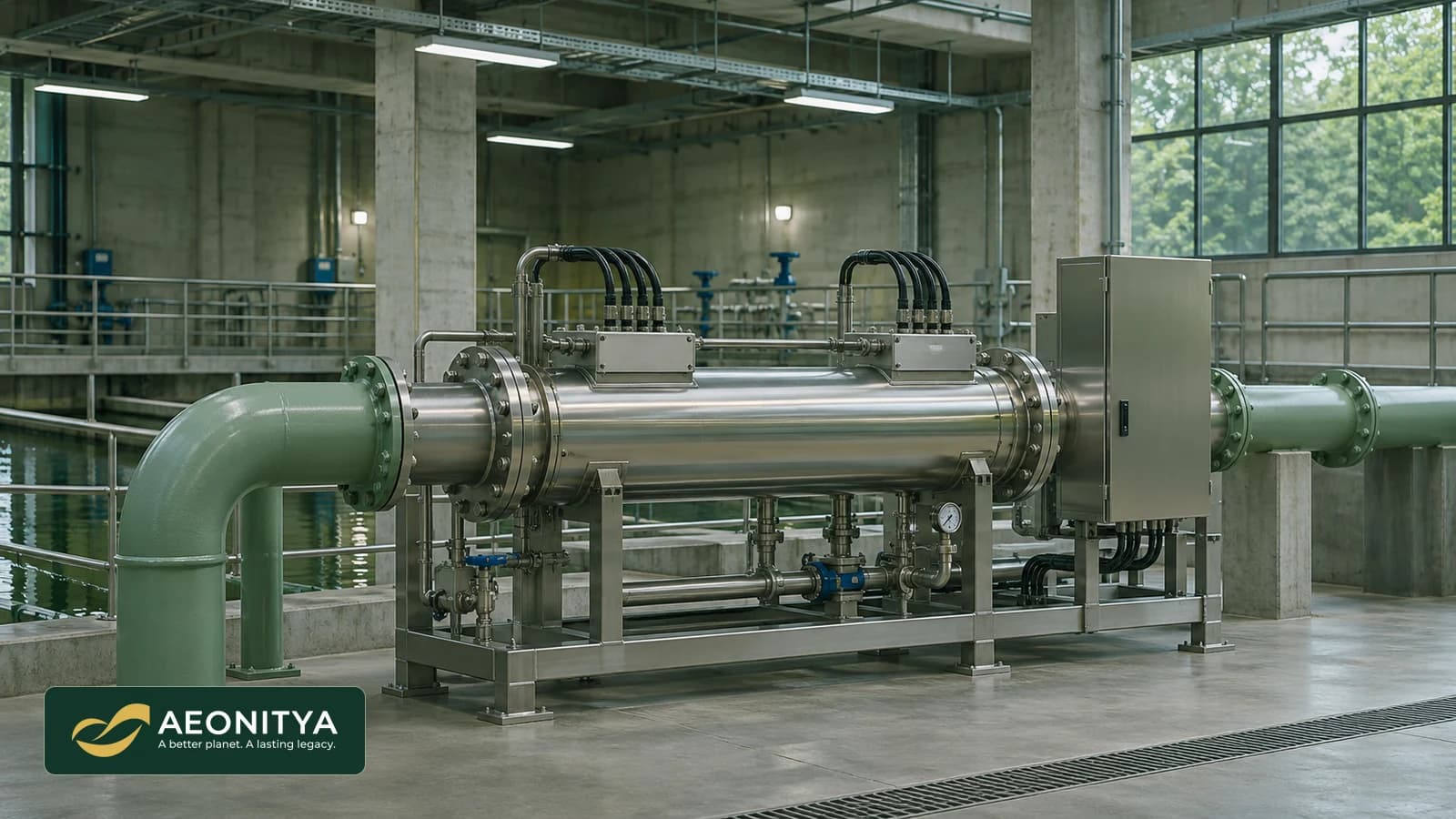
In a tender for drinking-water ultraviolet disinfection, the easiest figures to compare are lamp power and rated flow. The more important question is whether the reactor can deliver the required inactivation under the conditions the site will actually present. A high-flow claim without the corresponding water-quality and operating basis tells a buyer very little about the hardest hour.
UV disinfection relies on light reaching microorganisms as water passes through the reactor. The extent of that exposure depends on the design, flow and light conditions. UV transmittance, often expressed at a specified wavelength and path length, describes how much light passes through the water sample. It can change as the water changes, even when operators recognise no obvious difference in its appearance.
Ask for the paired conditions
The US EPA’s guidance for the Long Term 2 Enhanced Surface Water Treatment Rule describes validation and the need to relate site monitoring to validated reactor performance. That is a US drinking-water framework. Its underlying procurement question travels well: when a supplier gives a maximum flow, what UV transmittance and lamp configuration go with it?
Ask for the applicable validation report with the quoted equipment clearly identified. Confirm that relevant configurations, sensor arrangements and the monitoring approach correspond to the installed system. A validation range is not a single catalogue figure. The combinations that drive reactor sizing can differ from the most familiar operating point.
Review flow and water-quality measurements as time series where possible. An annual minimum UVT and annual maximum flow may occur on different days. The record needs to show when adverse conditions coincide, how the plant responds and whether the design allows for the limiting events. Where evidence is thin, describe it as a gap and give the project team a basis for further sampling.
A lamp that is on tells only part of the story
Lamp status, intensity, flow and measured or assumed water quality serve different purposes. A status light can show that an electrical component is enabled. It cannot establish the required treatment conditions. Sensor position, upkeep and the way the control calculation uses those readings belong in the review. The plant needs to know what it can still determine if a measurement is unavailable.
A useful handover document distinguishes normal operation, an alarm requiring investigation and operation outside the applicable validated range. Ask what volume is associated with each exception, where it was routed and who reviewed it. EPA’s guidance and its later toolkit describe using monitoring and operating records to support this assessment. The responsible operator and applicable authority determine how an event is handled in any particular jurisdiction.
In a hypothetical retrofit, both bids might cover the expected maximum day. One has a documented way to respond when a single reactor is unavailable during a low-UVT event. The other estimates the same capacity by assuming both units always run. That distinction belongs in the reliability comparison, even when the normal rating appears identical.
Give the plant a record it can reconstruct
An operator reviewing an event several months later should be able to connect the instrument readings, control state and water route to the same interval. A daily total may tell the plant how much water it treated. It may not reveal which train was in service at the time or which portion passed during an exception. Ask to see a specimen event report and trace the origin of each field. This is an opportunity to expose ambiguity in alarm configuration before hardware and control responsibilities are divided among suppliers.
A retrofit also changes what earlier sampling can tell you. If the proposed reactor sits after a treatment step that did not exist when samples were collected, ask whether those samples describe its likely feed. Conversely, good readings at the outlet of an existing process may tell you little about conditions during start-up or after a planned bypass upstream. Give the sampling brief a clear purpose and have the responsible specialist set representative locations and conditions. The objective is to make the operating envelope traceable to the water that will actually reach the reactor.
Ask commissioning to prove more than start-up
The procurement team should see how the plant will demonstrate that the documented operating basis is carried through to the controls, instruments and reports. List the information the operator needs to retrieve: reactor status, flow, relevant measurements, operating exceptions and maintenance. Identify who can make changes and how they will be reviewed. These are commissioning questions because repair after handover can mean rewriting both controls and operating procedures.
Room layout and access deserve time in the review. If maintenance on a sensor or lamp bank makes a train temporarily unavailable, that affects the resilience case. If a maintenance task can be performed while another reactor is running, determine how the arrangement has been assessed and reflected in the operating plan. Normal availability figures should explain their assumptions.
UV leaves no residual that can be measured further downstream as evidence of the delivered UV dose. It is therefore especially important that a credible record exists at the reactor and travels with the operating decision. Aeonitya can help prepare that evidence brief, alongside qualified disinfection and process specialists for technical selection, validation and commissioning. The purchase should leave the plant able to show when it operated within the conditions on which the offer depended.
Related reading: A membrane performance report should explain how integrity was checked